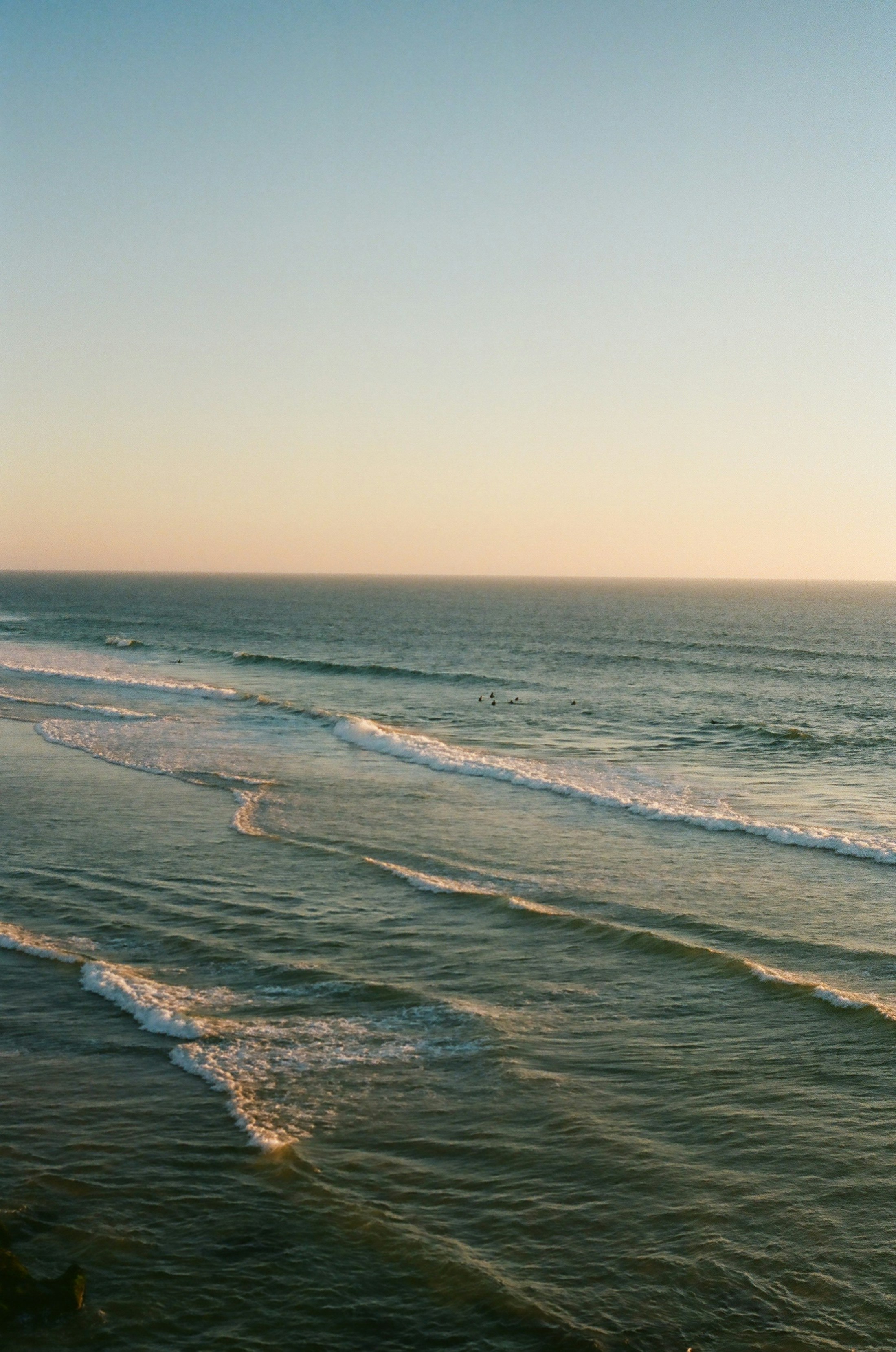
Long-exposure seascapes often begin with equipment and end with a smooth grey blur. Begin instead with the water. Watch three or four waves and decide whether you want to show their direction, their texture, or the stillness they leave behind.
For visible motion with some detail, start around half a second. For soft lines that show the pull of the tide, try two to four seconds. Only reach for thirty seconds when you genuinely want the sea to become an even surface. Shutter speed is descriptive, not decorative.
Choose a shutter speed for the movement you want to describe, not for the effect you want to imitate.
Compose and focus before attaching a strong neutral-density filter. Switch to manual focus once the subject is sharp, cover the viewfinder if your camera leaks light, and make one test frame. Check the highlights in the foam rather than judging exposure from the brightness of the rear screen.
Between frames, clean the front element. Salt spray ruins more coastal photographs than incorrect settings do. Then wait for the water to move through the composition, not merely into it, and release the shutter as the wave begins to retreat.
← Back to the journal1 answers